

The median home sale price in Jupiter, FL sits around $695,000 as of mid-2026. Most buyers pour their energy into saving for a down payment and don't give much thought to what else is due at the table - but there's real money beyond that down payment, and it catches people off guard more often than it should. This is a common hurdle for any first-time home buyer in Jupiter, FL.
Right now, Jupiter homes are spending about 67 days on the market, and local inventory is sitting around 526 available homes. That's a steady enough pace that you have time to understand your numbers before you commit. Use it.
What Are Real Estate Closing Costs?
Closing costs are the administrative, legal, and government fees required to transfer property ownership. None of this money goes to the seller - it goes to third-party service providers, the state, and your lender. In Florida, that covers everything from mortgage origination to state transfer taxes.
Every financed purchase involves these fees. Your lender is required to give you a detailed breakdown before you sign anything final.
Closing Costs vs. the Down Payment
The down payment goes directly toward the purchase price and builds equity from day one. Closing costs are separate - non-refundable fees paid for services rendered during the transaction. You pay both on closing day, typically via wire transfer.
Buyer vs. Seller Fees
Both parties write checks at closing, just for different things. Sellers typically handle real estate agent commissions and deed taxes. You, as the buyer, take on the costs tied to your mortgage, the property appraisal, and escrow setup.
Average Buyer Closing Costs in Florida
Most industry sources put Florida buyer closing costs somewhere between 2% and 5% of the purchase price. Data from CoreLogic's ClosingCorp narrows that to a state average of roughly 2.3% - which already runs higher than the national average of 1.81%.
On a median-priced $695,000 home in Jupiter, that 2.3% works out to about $15,985. That number shifts based on your loan type and the specific property, so treat it as a starting point, not a guarantee.
Typical Percentage Ranges
The 2% to 5% range is wide, and it's wide for a reason. A buyer purchasing a $400,000 property might pay anywhere from $8,000 to $20,000 depending on their specific loan terms. Buyers putting more down tend to land closer to the lower end of that range.
Why South Florida Fees Can Run Higher
Florida's insurance environment is what drives closing costs above the national norm. Lenders require you to pre-fund an escrow account with several months of property taxes and homeowner's insurance before you ever make your first mortgage payment. In a coastal market like Jupiter, higher windstorm and flood insurance premiums push those initial escrow deposits up considerably.
Example Buyer Closing Costs by Home Price
No single authoritative source publishes an exact fee table for every price point. What buyers can do is apply the 2.3% state average to their target price to get a reasonable baseline - with the understanding that actual costs commonly range from 2% to 5%, and lender fees plus county-specific taxes will move that number.
Cost Breakdown Across Price Tiers
At $300,000, the 2.3% average puts estimated closing costs around $6,900. On a $400,000 home, that's roughly $9,200. A $500,000 purchase lands near $11,500, and a $600,000 home brings the baseline estimate up to about $13,800.
Calculating Your Own Estimate
Multiply your maximum purchase price by 0.05. That gives you the conservative top end of what you might owe - enough cushion to absorb an insurance spike or higher lender points without scrambling. Once you're under contract, your lender provides a formal estimate that replaces the back-of-the-envelope math.
Itemized Breakdown of Buyer Fees
A closing statement has dozens of individual line items, but most fall into three buckets: loan origination, title services, and government taxes. The Loan Estimate document your lender provides early in the process is the clearest way to see exactly which services you're funding.
Loan and Lender Charges
Lenders charge origination fees to process and underwrite your mortgage. You'll also pay for the property appraisal, a credit report pull, and sometimes discount points if you want to buy down your interest rate. These loan-specific fees make up the largest share of your total bill.
Title Insurance Customs in Palm Beach County
Here's something Jupiter buyers are often surprised by: in Palm Beach County, local custom puts the owner's title insurance policy on the seller's tab. That's different from Miami-Dade and Broward counties, where buyers customarily cover that expense. It's not a legal requirement - it's custom - and it can be negotiated. What you will pay, regardless, is the lender's title policy.
Escrow Fees and Prepaids
Your lender requires you to fund an escrow account before closing to handle future property taxes and insurance. That means prepaying a portion of your annual homeowner's insurance policy and setting aside several months of property taxes upfront. Settlement fees paid to the closing agent or attorney also fall into this category.
Transfer and Recording Taxes
Florida doesn't impose a separate county-level transfer tax in Palm Beach County. The state's documentary stamp tax applies instead. As the buyer, you pay a documentary stamp tax on your mortgage at $0.35 per $100 of the loan amount, plus a nonrecurring intangible tax of 0.2% on the mortgage amount.
Who Pays What: Buyer vs. Seller Custom
In Palm Beach County, real estate contracts follow established norms for splitting closing expenses. That said, everything is negotiable before both parties sign the purchase agreement - the customs are a starting point, not a fixed rule.
Standard Buyer Expenses
You cover everything tied to obtaining your mortgage: the appraisal, the lender's title policy, and the mortgage documentary stamp taxes. You also fund your own escrow account for future property taxes and insurance.
Standard Seller Expenses
Sellers pay the real estate agent commissions for both sides of the transaction. They cover the state documentary stamp tax on the deed at $0.70 per $100 of the sale price. And in Jupiter, sellers customarily pay for the owner's title insurance policy.
Asking the Seller to Cover Your Fees
Seller concessions are worth pursuing. With Jupiter homes currently selling for about 96.2% of their list price, there's room to have a conversation. A seller may agree to credit a specific dollar amount toward your closing costs to get the deal done - especially if it's the difference between closing and losing the buyer.
Estimating Your Total Cash to Close
Your total cash to close is the exact wire transfer amount due on closing day - your down payment minus any earnest money already deposited, plus all finalized closing costs. Three days before you sign, you'll receive a Closing Disclosure that lays out this number to the cent.
Read it carefully. That's where you confirm that every negotiated credit actually made it onto the statement.
Using a Closing Cost Calculator
Online calculators are useful for estimating cash needs before you make an offer. Input 2.3% as your baseline Florida average, then adjust for down payment amount and loan type to see how different financing scenarios affect your fees.
Cash Purchases Without a Lender
If you're paying cash, you skip loan origination fees, appraisals, lender title policies, and mortgage doc stamp taxes - which meaningfully reduces your total closing costs compared to a financed purchase. You're still on the hook for settlement fees, optional inspections, and any prorated property taxes or HOA dues.
How to Reduce Your Closing Expenses
There are a few practical ways to lower what you bring to the table. Comparing service providers and negotiating credits are the most straightforward. And before any of that, read your initial Loan Estimate line by line and ask your lender to explain anything that isn't clear - that document is where savings conversations start.
Seller Concessions and Credits
A seller credit applies a specific dollar amount directly toward your closing costs. You can negotiate this during the initial offer or after the home inspection surfaces issues. It reduces your cash due at closing, though it may involve offering a slightly higher purchase price to make the math work for the seller.
Shopping for Lender Credits
Some lenders will credit your closing costs in exchange for a higher mortgage interest rate. It's a tradeoff - less cash now, higher monthly payment for the life of the loan. If you're short on upfront funds and can absorb the rate, it's worth modeling out. Compare loan estimates from multiple lenders so you can weigh the options side by side.
Negotiating With Providers
Your loan estimate will tell you which third-party services you're allowed to shop for independently. Pest inspectors, surveyors, and settlement agents can all vary in price. Getting competitive quotes on those line items is one of the few places buyers have direct control over what they pay.
Frequently Asked Questions
How much should I expect to pay in buyer closing costs for a home in Jupiter, FL?
Expect to pay between 2% and 5% of the purchase price. For the median $695,000 home in Jupiter, that translates to roughly $13,900 to $34,750, with the 2.3% state average landing near $15,985. Your loan type and insurance premiums will determine where in that range you actually land.
Is it customary for the buyer or the seller to pay for the title insurance policy in Jupiter?
In Palm Beach County, the seller customarily pays for the owner's title insurance policy. The buyer typically pays for the lender's title policy. This is a local custom rather than a legal requirement, and it can be negotiated in the contract.
FROM OUR BLOG
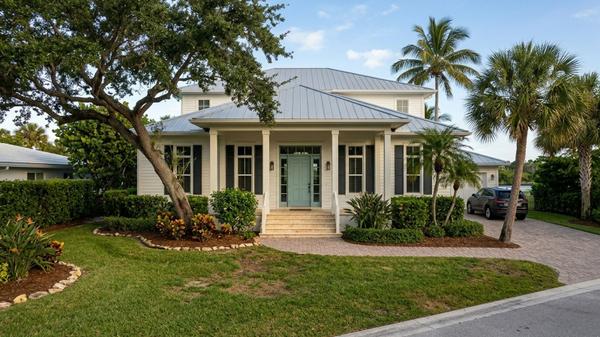
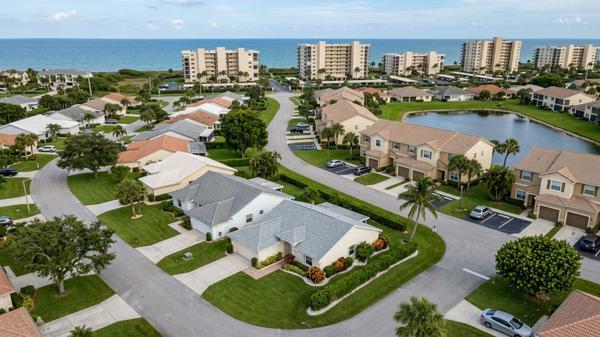
What to Know About Living in The Bluffs, Jupiter, FL
The Bluffs sits between the Intracoastal Waterway and the Atlantic Ocean, anchored near the intersection of Marcinski Road and U.S. Highway 1. As one of the best neighborhoods in Jupiter, FL, this district offers a real mix of residential options - condos, townhomes, single-family houses - all withi
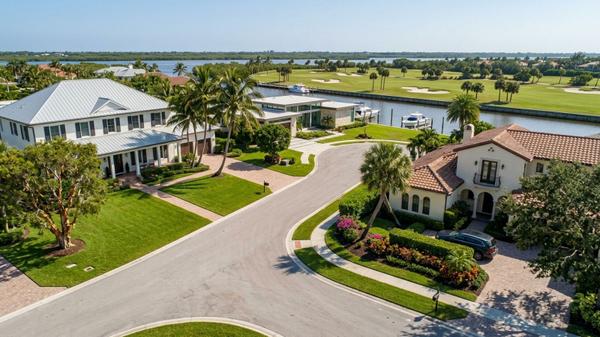
Living in Admirals Cove: A Guide to the Jupiter, FL Community
Admirals Cove spans roughly 727 to 976 acres and stands as one of the best neighborhoods in Jupiter, FL, with about 900 custom-designed residences built around a 180,000-square-foot East Clubhouse, 45 holes of championship golf, and a deep-water marina. That's the short version. The longer version i
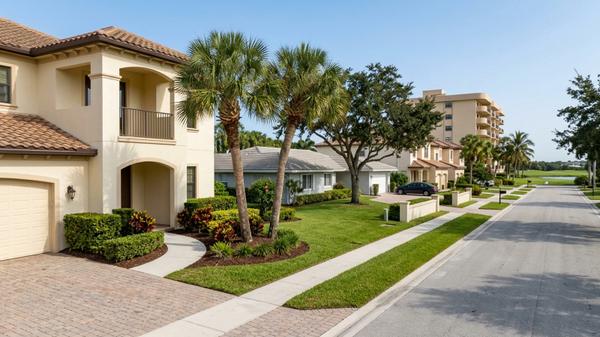
Living in Jonathan's Landing, Jupiter, FL: Homes, Cost & Local Guide
Jonathan's Landing was built in 1978 on 600 acres along the Intracoastal Waterway, and it remains one of the best neighborhoods in Jupiter, FL. The development holds roughly 1,200 homes spread across 26 distinct villages, with a mix of single-family houses, townhomes, and condominiums - and a gated
GET MORE INFORMATION

Agent SLSL698137